
When Is It Time to Replace a CRAC Unit Controller?
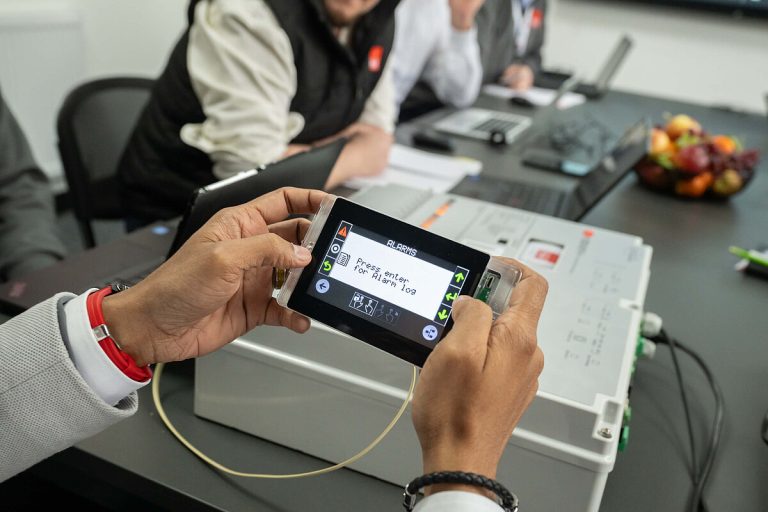
A data center cooling unit may still be in excellent mechanical condition, but this does not necessarily mean that every component is equally reliable. This is particularly true of its control units, which are among the most critical elements of the entire cooling system.
The controllers in CRAC (Computer Room Air Conditioning) units are responsible for regulating temperature and humidity, monitoring equipment operation, and managing alarms and fault notifications.
However, electronic components age over time, just like mechanical parts. As controllers get older, the risk of failure increases, while the availability of replacement parts and manufacturer technical support may become increasingly limited.
For this reason, when assessing an older cooling unit, it is not enough to examine only the condition of the compressor, fans and heat exchangers. Reviewing the lifecycle of the controller is equally important.
Why Does an Ageing Controller Pose a Risk?
For CRAC units that have been in operation for at least 15 years, it is particularly important to review the condition and expected remaining service life of their controllers.
Even if the cooling unit itself is operating properly, an obsolete controller can cause several types of problems.
1. Cooling unit shutdown
A controller failure can render the entire CRAC unit inoperable. While a fault affecting an individual sensor or minor peripheral component can often be repaired separately, a failure of the main controller may result in the complete loss of the unit.
2. Disruption of temperature and humidity control
The controller is responsible for maintaining the required environmental conditions. In the event of a malfunction or incorrect operation, the unit may no longer be able to regulate temperature, humidity and other operating parameters adequately.
3. Ageing electronic components
Continuous operation also takes its toll on electronic components, circuit boards and connections. Material fatigue and other electronic issues that develop over the years increase the likelihood of unexpected failures.
4. Hardware and software obsolescence
As technology advances, older controller models may eventually reach the end of manufacturer support. Obtaining firmware updates, compatible components and professional technical assistance can become increasingly difficult.
5. Limited availability of spare parts
Even a minor controller fault can become a serious problem if suitable replacement parts are no longer available for the specific model. In such cases, what was once a straightforward repair can turn into a lengthy and costly intervention.
What Happens If Controller Replacement Is Only Considered After a Failure?
In a data center, the loss of a cooling unit means much more than a simple technical inconvenience.
If a CRAC controller fails, the cooling capacity provided by that unit becomes unavailable. Depending on the available reserve capacity and the redundancy of the data center, this can place a significant additional load on the remaining operational cooling units.
The situation becomes particularly critical when the failed controller is no longer available on the market. In such cases, sourcing a compatible component or planning a complete controller replacement may take considerably longer than expected.
Emergency interventions can result in additional costs, operational difficulties and extended downtime.
It is therefore important to understand that a controller does not necessarily need to be replaced because it has already failed. In many cases, replacement is justified precisely because the consequences of a potential future failure are becoming increasingly difficult to manage.
When Should Controller Replacement Be Planned?
Controller replacement is primarily a risk mitigation measure. Its main objective is not necessarily to improve energy efficiency, but to maintain reliable operation and prevent unexpected downtime.
For units that have been in operation for at least 15 years, or are approaching the end of their manufacturer support lifecycle, reviewing the controller lifecycle is particularly important.
Of course, this does not mean that every older controller needs to be replaced immediately. The appropriate solution depends on several factors:
The type and age of the installed controller.
The current status of manufacturer support.
The availability of replacement parts.
Modernisation options compatible with the existing equipment.
The facility’s operational reliability and redundancy requirements.
In data centers with multiple cooling units, controller replacements can also be carried out in stages. This allows the work to be planned in advance and avoids the need for urgent interventions following an unexpected failure.
How Are Controllers Assessed and Replacement Plans Developed?
Based on STULZ’s professional approach, reviewing the lifecycle of controllers involves several consecutive steps.
1. Identifying controller types and assessing their lifecycle
The first step is to identify the existing controllers, examine their age and operating history, and determine the current status of manufacturer support.
2. Assessing spare parts availability and obsolescence risks
It is necessary to check whether the required replacement parts, electronic components and appropriate technical support are still available for the specific controller.
3. Evaluating compatibility and modernisation options
For older controllers, available replacement and upgrade options must be assessed, including their compatibility with the existing cooling unit.
4. Planning a phased controller replacement
In systems consisting of multiple CRAC units, replacements can be scheduled in stages, taking redundancy, operational requirements and planned maintenance periods into account.
5. Testing and commissioning
Following controller replacement, the configuration and equipment operation must be checked, including temperature and humidity control and alarm functions, to ensure that the system operates correctly.
The objective is not to replace every older controller automatically, but to identify in time when ageing electronics and declining spare parts availability represent an unacceptable operational risk.
Don’t Wait for the Controller to Fail!
A CRAC unit may be capable of providing adequate cooling performance for many more years. However, this does not necessarily mean that its controller will remain equally reliable for the same length of time.
The ageing of electronic components, the discontinuation of manufacturer support and the lack of replacement parts are all risks that should be addressed before a failure occurs.
Regular condition assessments and proactive controller lifecycle planning make it possible to schedule upgrades at the right time, improve cost predictability and maintain the continuous availability of cooling capacity.
Operational reliability does not begin at the moment of failure. It starts with making the right preventive decisions at the right time.
If your data center or server room is equipped with older STULZ CRAC units, it is worth reviewing the condition of their controllers and the availability of replacement parts.
Get in touch with us to receive professional advice on the condition of your existing cooling system and the modernisation options available!